
Expo West 2026: 3 Strategic Moves for Scaling BFY Brands to Retail
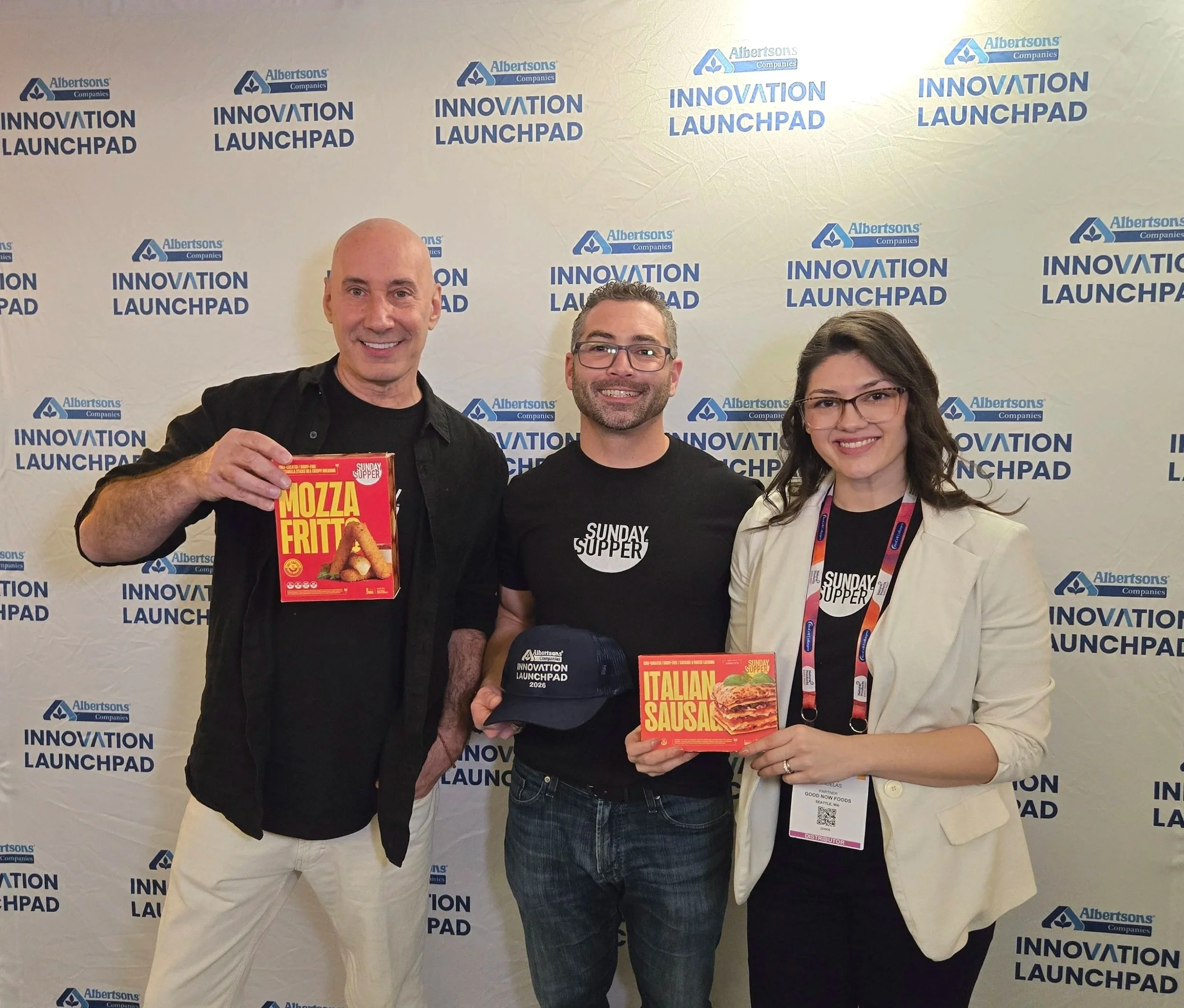
Group Picture at the Albertsons Innovation Launchpad
Out of 641 Applications, our brand, Sunday Supper, was honored to be part of the few that made it to pitch day!
Introduction
Walking 600,000 square feet of floor space in Anaheim isn’t just about discovering the next big flavor profile—it’s about pattern recognition. Out of the thousands of brands at Expo West this year, the ones truly built for a $150B "Better-For-You" future all shared three specific traits. They weren’t just "DTC successes" or "founder-led stories"; they were businesses built to survive the meat-grinder of national retail and a volatile global economy.
As investors and growth partners, we spent four days separating out the noise. Here is what we spotted.
1. Building a Moat, Not Just a Buzzword
In a sea of "Clean Label," "Organic," and "Protein" callouts, many brands have started to blend together. We noticed that the winners weren't trying to be "everything to everyone." They didn’t just have a nice package; they had a clear Moat.
The Reality Check: If your Unique Value Proposition (UVP) can be replicated by a private-label brand or a massive conglomerate in six months, you don't have a defensible business. You have a product.
The Tactical Take: We look for brands with "Product-First" identities—proprietary cold-process methods, unique functional ingredients, or hyper-specialized sourcing.
The Market Concentration Risk: If your UVP is too narrow (e.g., "The best keto snack for crossfitters"), you are highly susceptible to market shocks. If your core channel—be it gyms or high-end bistros—shuts down, your business shouldn't have to shut down with it. The winners have a UVP that pivots across channels without losing its soul.
2. Shelf-Stay Power
Everyone wants the "Green Light" from a national retailer. But getting on the shelf is the easiest part. Staying there is a war.
The Reality Check: Retailers don't care about your "why." They care about Turn Rate. If your product sits, you’re dead. Too many "DTC darlings" enter retail without the operational wherewithal to support the burn.
The Tactical Take: Scaling to $20M+ requires a brand to play in multiple arenas (channels). This means your unit economics must be locked before you step onto the floor.
Loyalty vs. Marketing: If you have to spend $10 in coupons and digital ads just to get a $5 first-time trial, your model is a house of cards. We look for Loyalty Metrics. Can you prove repeat buys? True “Market Readiness" means having the capital and the team to fund the demos, the local marketing, and the supply chain buffers to keep the shelf full and the velocity high.
PS: That’s why the big guys like to buy those that are disrupting the market and put money into their growth—so they don’t have to start from scratch!
3. Supply Chain Sovereignty
While others were talking about the product's properties—flavor profiles, certifications, or how many stores they're already in—the smartest founders were talking about Supply Chain Control. In a world of geopolitical tension and unpredictable shipping lanes, relying on "the way things have always been done" is no longer a strategy.
The Reality Check: Can you actually ship in six months? If you are at the mercy of a co-packer who just deprioritized your run, or an ingredient supplier stuck behind a global blockade, your brand effectively ceases to exist.
The Tactical Take: Reliability is the new "Premium." The brands standing out in 2026 are those that have secured their own manufacturing or locked down exclusive, multi-year supplier contracts.
Economic Sustainability: We favor brands that internalize their operations—whether that’s owning the production line or securing regional control over raw ingredients. It’s not just about "being green"; it’s about Autonomy. If you don’t control your input costs, your production schedule, and your delivery timelines, you aren't ready for a growth partner—you're just a passenger on someone else’s ship.
The Bottom Line
The "Growth at all costs" era of CPG is officially over. It has been replaced by a brutal focus on Resilience and Velocity.
At Prospera Ventures, we aren’t looking for a "brand" with the most followers; we’re looking for the business with the strongest engine and moat. We look for the "Scale-Ready" markers that prove an enterprise can grow without breaking its foundation.
Does your current strategy hold up under these pressures? If you’re ready to move from "Founder-led" to "System-scale," let’s talk.